My Percussion Setup for Bill Miller
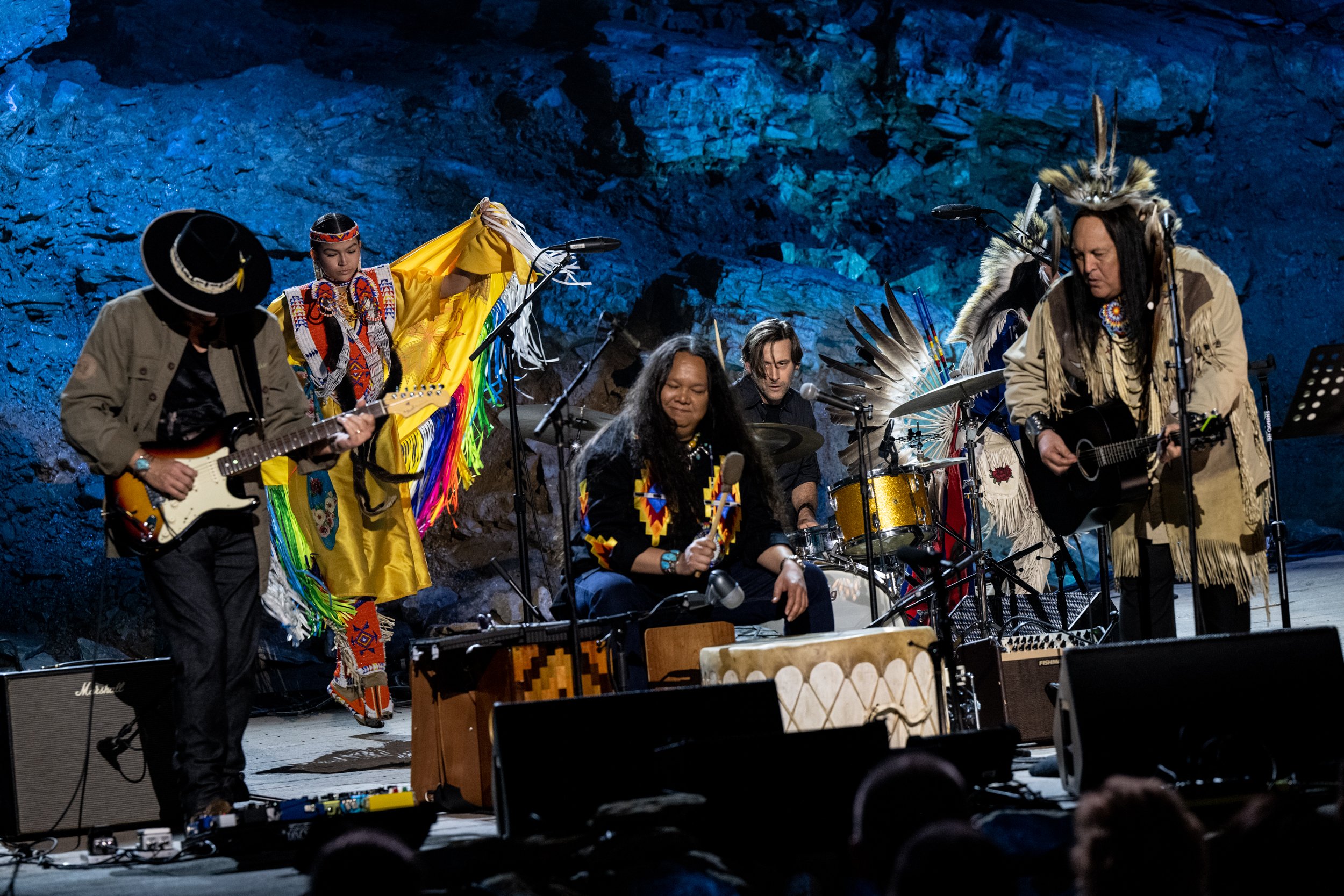
I’ve received a lot of questions about my setup for the televised performance on PBS with Native American artist Bill Miller, so I dug up some photos taken from the stage during soundcheck:

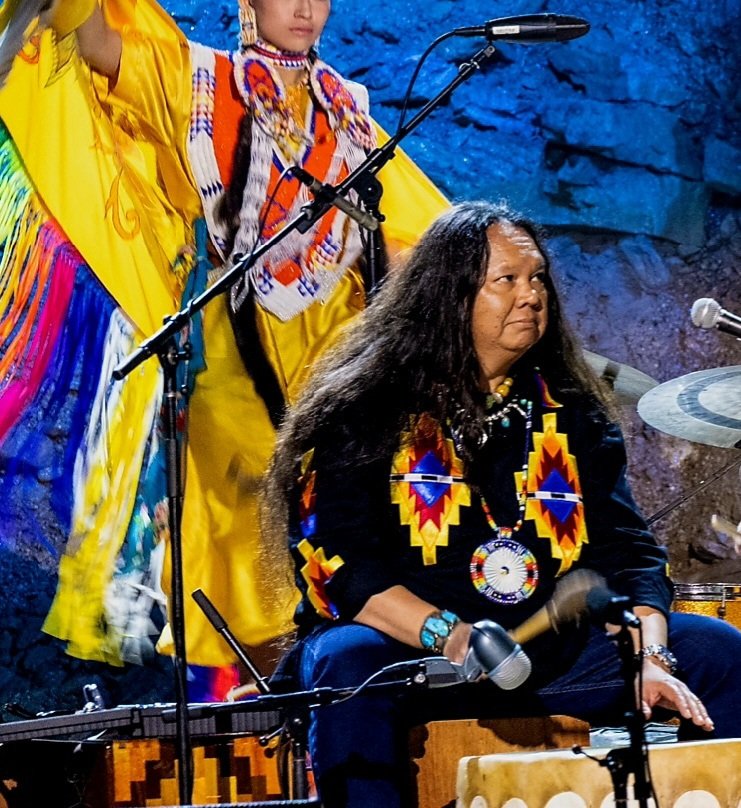
Ken Lingad’s percussion setup for Bill Miller at The Caverns for The Caverns Sessions Festival
From left to Right:
Authentic Pueblo Indian ceremonial drum — handcrafted and used by my own family for generations
Tambourine mounted to DW foot pedal
Stage Front: authentic traditional powwow drum from Black Eagle Singers (Jemez Pueblo)
Main Gon Bops Cajon - Alex Acuna model
2nd Gon Bops Cajon for backup (I had one crack while on stage in Nashville a few years ago) - also Alex Acuna model, which doubles as a flat surface for easy access to my Schlagwerk Studio Shakers set or other items
Latin Percussion Tambourine and custom Reunion Blues stick bag
I use different drum mats, depending on the scale of my setup. The one pictured is my small drum mat by Protection Racket. I never — ever — leave it to the backline buyer to supply it because drum equipment creeping out of my foot range sucks.
Not pictured: Yamaha Peter Erskine Signature 10’ x 4” Snare Drum - I typically place this in front of me, or to the immediate left of my Hi Hat stand on my drum kit setup.
Although Bill Miller’s stage plot calls for two monitors in front of me, I typically use at least one floor monitor on my left side, which I prefer over my in-ears.
The only mic I specifically demand on my rider is the Shure Beta-52 for my large powwow drum (same for my bass drum when using a full kit). For this live recording for televised broadcast, the engineers placed one at the port of my main cajon — I don’t typically do that because I don’t hear a sonic benefit. I do always place a Shure SM57 (or similar-use mic) at the front of the cajon to capture the tonal resonance and nuances in my playing.
SIDE NOTE ON MICS: I have developed a preference for using overhead mics in live performances. My tour rider currently specifies a matched pair of Earthworks QTC50 mics, or a pair of Shure SM81 mics as a substitute that is in nearly all sound engineers’ tool kits.
Another side note that answers questions about the other sounds (cymbal splashes, sound effects, etc.) the audience hears: I generate different percussive sounds through my vocal mic (a mix of my own educational techniques I developed in the early 90s and Konnakol — the rhythmic spoken-word style of South Indian music), in addition to my lead and harmony vocals.

Audience-facing view - note the “Flying Free” eagle and Zia Pueblo symbolism painted on the powwow drum skin
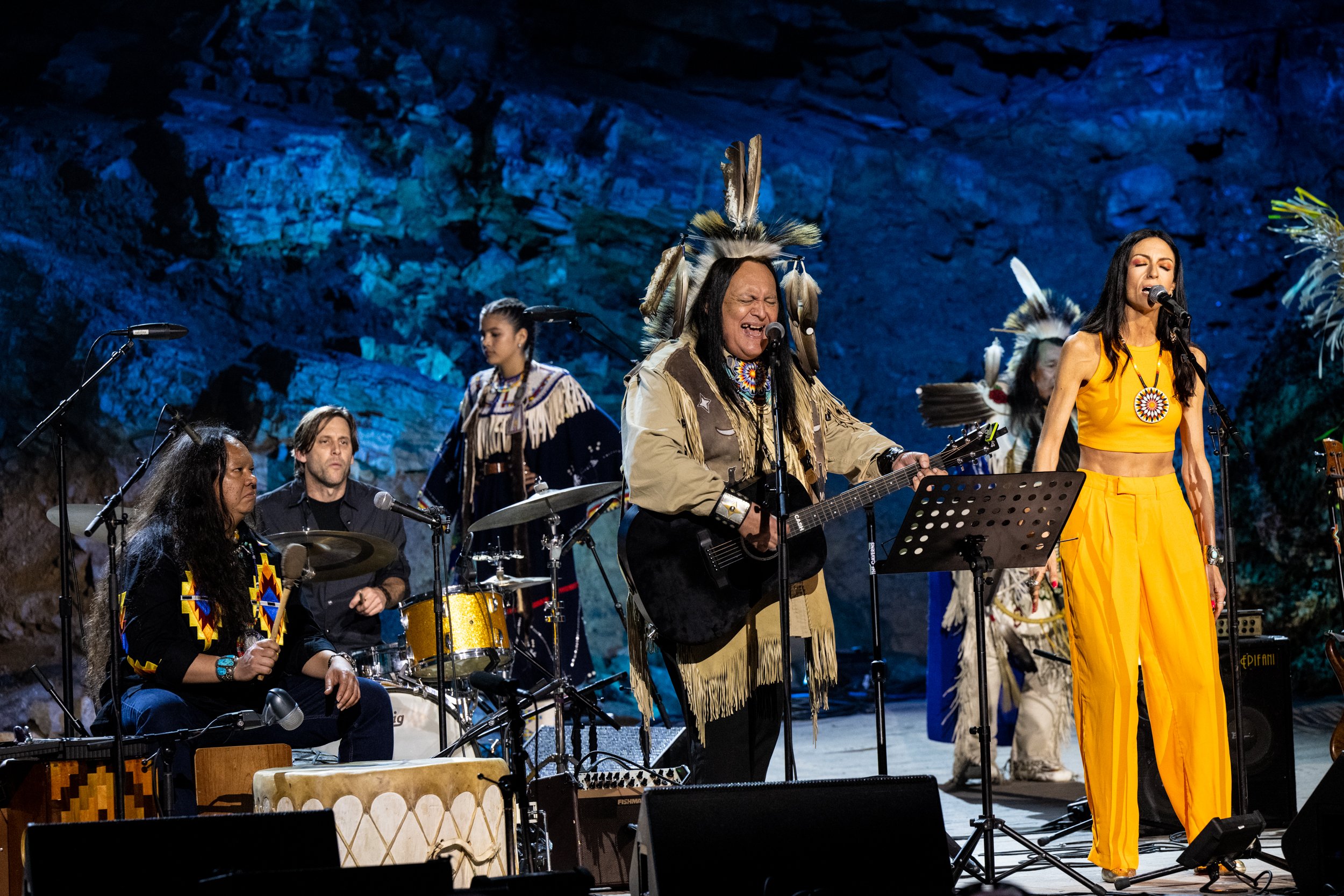
A fan shot this video of us performing GHOST DANCE by Bill Miller at the world-famous Caverns venue